


The Learning Lab
A collaborative space
for honest questions, shared learning
and Balanced ways of working.
Join Us!
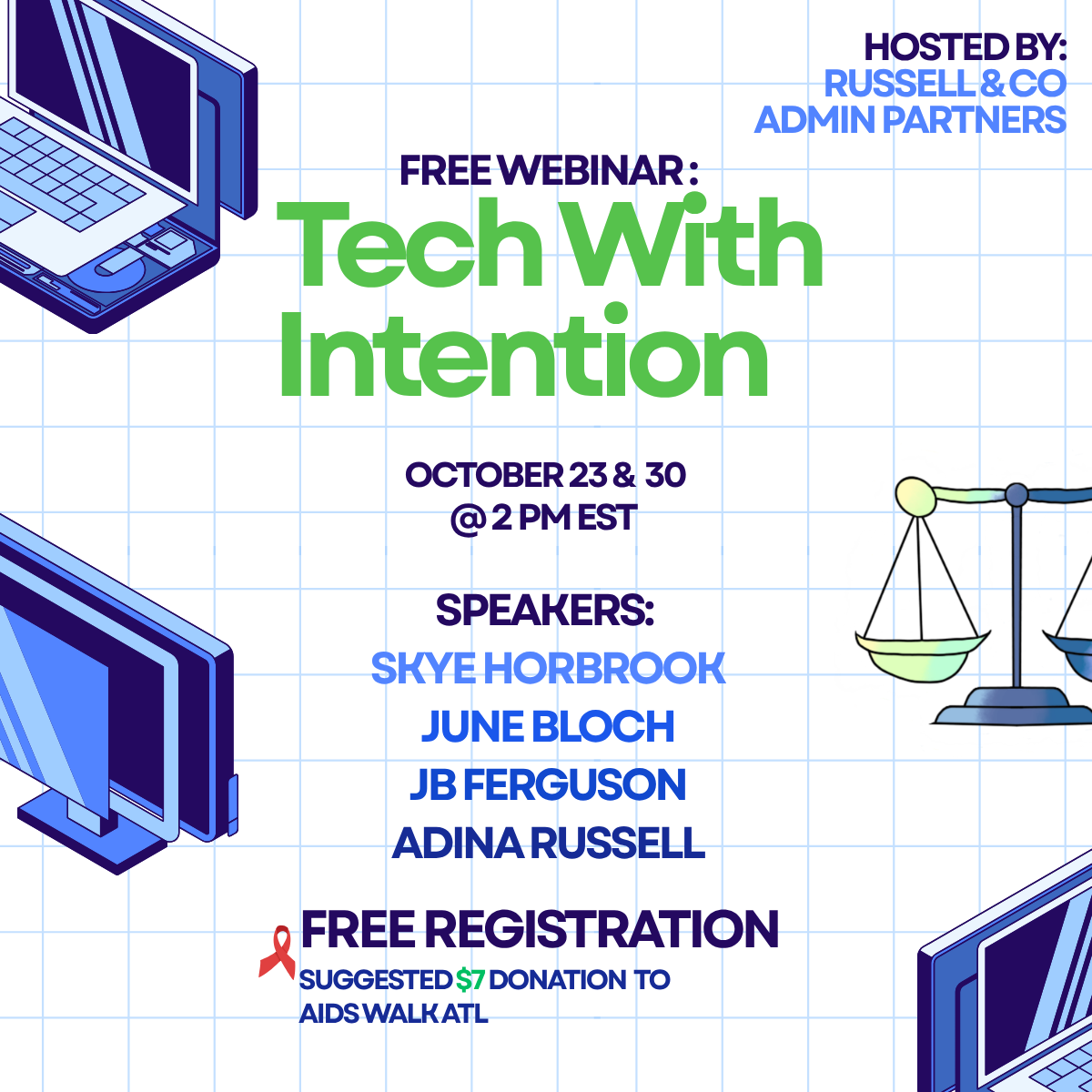
𝗪𝗵𝗮𝘁 𝗬𝗼𝘂’𝗹𝗹 𝗟𝗲𝗮𝗿𝗻
✦ How to choose technology that aligns with your values
✦ How to evaluate automation and AI tools in light of your organization’s mission, values, privacy needs, and real capacity.
✦ Simplify essential operations
✦ Explore approachable workflows that can reduce repetitive administrative work, improve follow-through, and make everyday processes easier to manage.
✦ Explore ethical, open-source AI options
✦ Get introduced to open-source alternatives and practical use cases for teams that want more transparency, flexibility, and control over how AI is used.
✦ Build toward a secure, organization-owned AI assistant
✦ See what it can look like to create an affordable, privately owned AI tool that supports your team’s internal knowledge and routine work while people remain responsible for decisions, accuracy, and what gets shared.
𝗘𝘃𝗲𝗻𝘁 𝗦𝗰𝗵𝗲𝗱𝘂𝗹𝗲 & 𝗦𝗽𝗲𝗮𝗸𝗲𝗿𝘀
𝗦𝗲𝘀𝘀𝗶𝗼𝗻 𝟭: 𝗔𝗜 𝗘𝘁𝗵𝗶𝗰𝘀 𝗔𝗹𝗶𝗴𝗻𝗺𝗲𝗻𝘁 & 𝗢𝗽𝗲𝗻 𝗦𝗼𝘂𝗿𝗰𝗲 𝗔𝗹𝘁𝗲𝗿𝗻𝗮𝘁𝗶𝘃𝗲𝘀
🗓️ Friday, October 23rd at 2:00 PM EST
✽ 𝗞𝗲𝘆𝗻𝗼𝘁𝗲: Skye Horbrook Technologist & contributor to the AI & Human Rights Index
✽ 𝗟𝗶𝘃𝗲 𝗗𝗲𝗺𝗼: L. June Bloch Anthropologist & Humanist AI Systems Builder
𝗦𝗲𝘀𝘀𝗶𝗼𝗻 𝟮: 𝗢𝗽𝘀 𝗔𝘂𝘁𝗼𝗺𝗮𝘁𝗶𝗼𝗻𝘀 & 𝗕.𝗜.𝗬. (𝗕𝘂𝗶𝗹𝗱-𝗜𝘁-𝗬𝗼𝘂𝗿𝘀𝗲𝗹𝗳) 𝗔𝗴𝗲𝗻𝘁
🗓️ Friday, October 30th at 2:00 PM EST
✽ 𝗘𝘀𝘀𝗲𝗻𝘁𝗶𝗮𝗹 𝗢𝗽𝘀 𝗔𝘂𝘁𝗼𝗺𝗮𝘁𝗶𝗼𝗻𝘀: Adina Russell
Founder & Principal of Russell & Co Admin Partners)
✽ 𝗕𝗜𝗬 𝗔𝗜-𝗔𝗴𝗲𝗻𝘁: J.B. Ferguson AI Transition Leader & Open Source Contributor
HEART leadership
The HEART+SMART Goals Framework
“While traditional SMART goals provide structure around what we want to accomplish,
HEART challenges us to consider how we show up while accomplishing it.”

-
Lead with integrity, honesty, and reverence for yourself and others. Honor is about earning trust, keeping your word, making values-aligned decisions, and doing what is right even when no one is watching.
-
Understand and connect with others through compassion. Empathy moves leaders from assumption to understanding by listening, considering the experiences of others, maintaining appropriate boundaries, and recognizing the person behind the performance.
-
Show up as your true self, even when it is difficult. Authentic leadership requires alignment between your values, words, decisions, and actions rather than performing for acceptance or approval.
-
Bounce forward and continue moving through adversity. Resilience is not simply returning to where you were before a setback. It is learning, recovering, strengthening your systems, and moving forward with greater wisdom and purpose.
-
Hold on to purpose with grit, grace, and growth. Tenacity is purpose-driven perseverance that recognizes when to push, when to pivot, and when to partner. It also requires teamwork, humility, collaboration, and a willingness to continue learning.
The HEART Leadership Framework — Honor, Empathy, Authenticity, Resilience, and Tenacity — was developed by Chrislin “Chrissy” Flanagan and introduced in her book I Was Born on a WINSday. Used with permission.
The Heart Leadership Framework was born from both my personal and professional leadership journey, particularly following my open-heart surgery, which caused me to think differently about what it means to lead with both your head and your heart. In the book, I define HEART as Honor, Empathy, Authenticity, Resilience, and Tenacity.
-
I have applied the HEART Leadership Framework throughout my own leadership practice in a variety of professional settings, including conferences, speaking engagements, team-building sessions, and organizational trainings. In these spaces, I use the framework to help leaders and teams think more intentionally about how they show up, communicate, build trust, navigate challenges, and remain aligned with both people and purpose.
The framework has also served as a practical tool for leadership reflection, team development, organizational culture building, and professional growth. I have used it to help individuals and teams move beyond simply focusing on outcomes and instead examine the behaviors, relationships, accountability, and values that influence how those outcomes are achieved.
For example, a leader may establish a SMART goal to complete a major project within 90 days while meeting identified performance measures. Applying HEART adds another layer:
Honor: Are we communicating honestly and following through on our commitments?
Empathy: Are we considering the people responsible for doing the work and listening to what they need?
Authenticity: Are our actions aligned with what we say we value?
Resilience: How will we learn, adjust, and move forward when challenges arise?
Tenacity: How will we remain committed to the purpose while knowing when to push, pivot, collaborate, or seek additional support?
This allows goal setting to remain both results-driven and people-centered.
“People are not simply resources to be managed. They are individuals to be seen, valued, and developed.” - C.F
Making Changes Stick
A theory about Radical Love in Practice
By Adina Russell, Oct 22 2025
-
Throughout a career devoted to achieving lasting social change, I often harped on the concept of “sustainability.” I’d say to myself (and many others): yes, we all want to achieve some kind of change—personally, socially, politically—but how can that change be sustained? How do we prevent ourselves from falling back into the same bad habits?
Although I had been engaging in practical change management, I wasn’t introduced to a formal “change management” practice until joining Skeleton Key Strategies. Principals Simone and Justin supported me in pursuing formal training through ProSci.
I was humbled to realize that the way I was traditionally taught to plan, execute, and analyze projects was missing this major element: Change Management. The training took what I’d learned on the ground—guiding teams, aligning stakeholders, helping people adapt—and gave it language, structure, and a framework I could apply at scale. I’m excited to lead change initiatives with this structured approach, using individual success as the litmus test for a successful project and data to back it up.
-
Change management is a customizable framework for supporting individuals through obstacles, clearing the way for both project and individual success—with sustainability as the guiding star.
You always hear the phrase “a chain is only as strong as its weakest link.” This is a great way of thinking about change that involves a group of people. The ProSci methodology for change management allows you to adjust your approach based on where the first weaknesses (or risks) appear in your “chain” of people.
The ProSci methodology provides structured ways to assess individual readiness (through frameworks like “A.D.K.A.R” Awareness, Desire, Knowledge, Ability, Reinforcement), measure project health, and track progress across three general phases: Prepare the approach, Manage the change, and Sustain the outcome.
-
In project management roles, we’re often taught to focus on managing stakeholders and keeping projects on track to achieve the goals set for us.
The problem? These goals are usually not people-focused. They’re typically metrics for increased revenue, user adoption, or workflow optimization. While these are all valid goals, they don’t center around the primary factor that determines whether they’ll succeed: people.
A strategy built without including those who will be most impacted is doomed to create a future state where success is not fully realized or fails completely.
Rewritten through a change management lens, traditional goals become far more actionable.
For instance, instead of a general organizational goal to “increase revenue,” a goal might become: “Drive adoption of new processes and tools that enable teams to identify and capitalize on revenue opportunities more effectively.”
Instead of “increase user adoption,” a goal could expand to: “Increase user adoption through targeted communication, training, and engagement strategies that build confidence and competence with the new system or process.”
See the difference? This level of specificity builds the change management plan for you, and forces you to identify what specific obstacles your team is facing and what strategies would best address those obstacles. It removes the trial-and-error guesswork that often comes with goals written by individuals who aren’t involved in the day-to-day work and don’t have the same frame of reference as those who will be directly impacted.
Change management, in conjunction with the principle of appreciative inquiry, puts us in a unique position to help stakeholders identify not only blockers but also opportunities, and build a plan to address them at the onset. This on-the-ground approach ensures the foundation for success is laid before the project even begins.
-
Change is scary, but it can also be healing. We all know that person who hates change; in some cases, it might be you, reading this article. Despite that feeling, we all know change is necessary, and when done well, it can lead to something transformational.
When you begin the process of overhauling workflows, rewriting policies, and generally changing the way people work day-to-day, there will always be resistance. It is how we respond to resistance that makes all the difference.
When people begin to ask, “Why are we changing?” the answer is usually simple: What we are doing is not working. They ask, “Well, what if this new way of working is worse than what we’re doing now?” and and while a familiar process might be comforting, if the outcome has not moved you in the direction of your goal, it is time to revisit your strategy.
When teams feel welcomed to name these fears, there is a collective realization around what may have pulled us away from our shared goal. This moment of shared alignment and clarity helps us reconnect with what once felt energizing about the work. That shared clarity makes it easier to see the road ahead, where meaningful change is not only attainable but within reach.
-
At Russell & Co, Admin Partners we work to understand your team as individuals, and their holistic needs.
There is never a one-size-fits-all solution. We begin with proven best practices, then adapt them to the people doing the work. Taking into account each person’s capacity, expertise, professional development desires, and day-to-day realities so the approach is practical, sustainable, and focused on fostering growth rather than prioritizing quick wins and encourgaing a culture of martydom.
Space is made to name the worries and questions that arise about the future of a role, organization, firm, or industry. From there, the focus shifts to the shared question we will never stop answering: Where do we want to be, and what will it take to get there? Together, that vision becomes the basis for practical, and thoughtful planning.
Partnership means more than providing support, It means working alongside people in ways that build confidence, reignite fiery passions, improve the balance of work and life, while growing toward what is possible; individually and together.
If you’re ready to embark on that journey with us, let’s start a conversation about your goals and what a more sustainable path forward could look like, together.
Send us a message at info@russelladminpartners.com or use the contact form.
We can’t wait to meet your team!
Click headings to expand sections
Cross-posted to the
Skeleton Key Strategies blog